
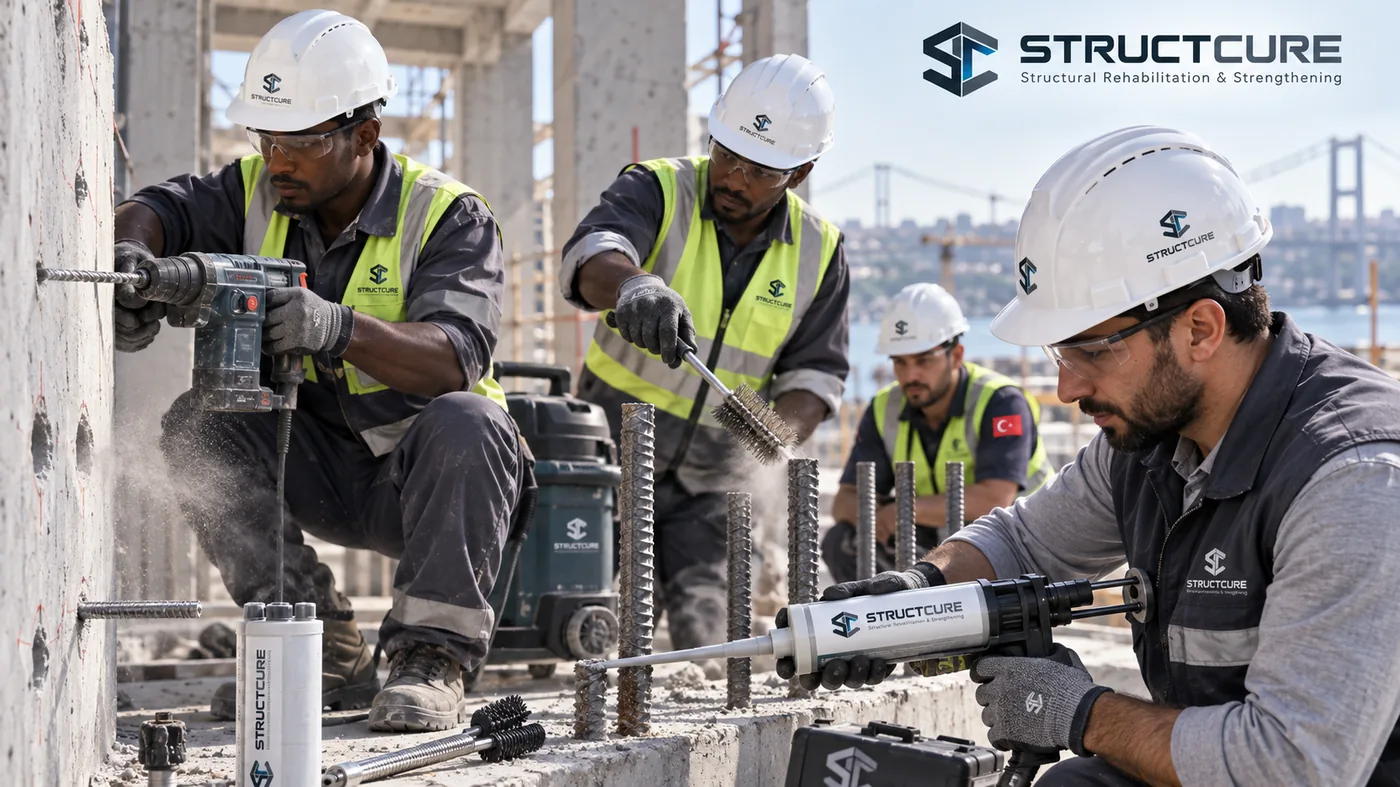
Where it is used
Typical uses include slab or wall extensions, retrofit connections, equipment bases and steel-to-concrete details. Post-installed bars should follow the design intent and approved system limitations.
The exact response should be defined from verified site conditions, relevant design information and the performance objective. Where evidence is incomplete, further investigation is safer than assuming the visible symptom tells the whole story.
Hole preparation
The specified drilling method affects the hole surface. Diameter and depth must be controlled, and the cleaning sequence must remove dust and debris using the tools required for the system.
The exact response should be defined from verified site conditions, relevant design information and the performance objective. Where evidence is incomplete, further investigation is safer than assuming the visible symptom tells the whole story.
Installation controls
Resin components must mix correctly, initial material may need to be discarded, the hole should be filled without voids and the bar inserted to the correct depth before the working time expires.
The exact response should be defined from verified site conditions, relevant design information and the performance objective. Where evidence is incomplete, further investigation is safer than assuming the visible symptom tells the whole story.
Design considerations
Edge distance, spacing, concrete strength, cracking, sustained load, temperature, moisture, fire and seismic requirements can influence selection and capacity.
The exact response should be defined from verified site conditions, relevant design information and the performance objective. Where evidence is incomplete, further investigation is safer than assuming the visible symptom tells the whole story.
Verification
Records may include hole depth, cleaning confirmation, batch and expiry, installation temperature, cure time and proof testing where the design or quality plan specifies it.
The exact response should be defined from verified site conditions, relevant design information and the performance objective. Where evidence is incomplete, further investigation is safer than assuming the visible symptom tells the whole story.
Frequently asked questions
Chemical anchoring bonds reinforcement or threaded rods into drilled holes. Reliable performance depends on engineered geometry, a qualified resin system and disciplined drilling, cleaning, installation and curing.
Yes. General guidance cannot determine the cause, capacity, material compatibility or safe repair scope for a specific structure.